Someone spray painted a line on the patio wall at Thee Parkside sometime this spring, and it stuck around long enough to become the neighborhood's own epitaph for the year.
"This will be condos you can't afford!"
The line ended up printed on t shirts sold behind the bar before the last band even finished loading out. By July 5, the room at 17th and Wisconsin that had hosted more than 200 shows a year for a quarter century, and once hosted a secret show by the Coverups, a Green Day side project, poured its last pint and went dark for good.
If you live on the hill, you already have the shorthand version of this year. The punk bar is gone. Bottom of the Hill, the 350 capacity room a few blocks away, is set to close at the end of 2026 after 35 years. California College of the Arts is winding down its San Francisco campus, with plans to hand the site to Vanderbilt University by 2027. Read enough local coverage of all three and the story starts to sound like the whole neighborhood is being unplugged at once.
The dates tell a different story once you line them up.
| Institution | Track record | Status as of August 2026 |
|---|---|---|
| Thee Parkside | 26 years running | Closed for good July 5 |
| Bottom of the Hill | 35 years running | Closing at year's end |
| Potrero Hill Artists' Exhibition | 65th edition, traces to 1955 | On view through Aug. 29 |
| Potrero Hill Festival | 51st year | Returns Oct. 17 |
Thee Parkside ran 26 years. Bottom of the Hill ran 35. The volunteer run art show at the Potrero Branch Library traces back to 1955 and is in the middle of its 65th edition right now, a run that swallows both bars' entire histories with room to spare. That gap is not a coincidence of timing. It is a difference in what each institution actually depends on.
Thee Parkside's ending has a single, traceable cause. The building's longtime owner, Maria Gloria Rando, died, and the property changed hands last year to a buyer offering somewhere between $1.3 and $1.33 million, reportedly outbidding the bar's own operator. Malia Spanyol, who had run the place since 2007, kept live music going through March and then closed the doors entirely on July 5. One owner passed away, one sale went through, and 26 years of Wednesday night shows ended on a fixed calendar date. Longtime regular Duff Ryan had been coming since the early 2000s, first for punk shows, later as a CCA student grabbing tater tots after class a few blocks up the hill. Staffer Shane Plitt lived in the green room above the bar for a stretch during the pandemic. Both losses are real. Neither had anything to do with whether the neighborhood still wanted the bar around.
Bottom of the Hill's closing, announced within weeks of Thee Parkside's, compounds the feeling that the hill's live music infrastructure runs on a lease clock that eventually hits zero no matter how full the room stays.
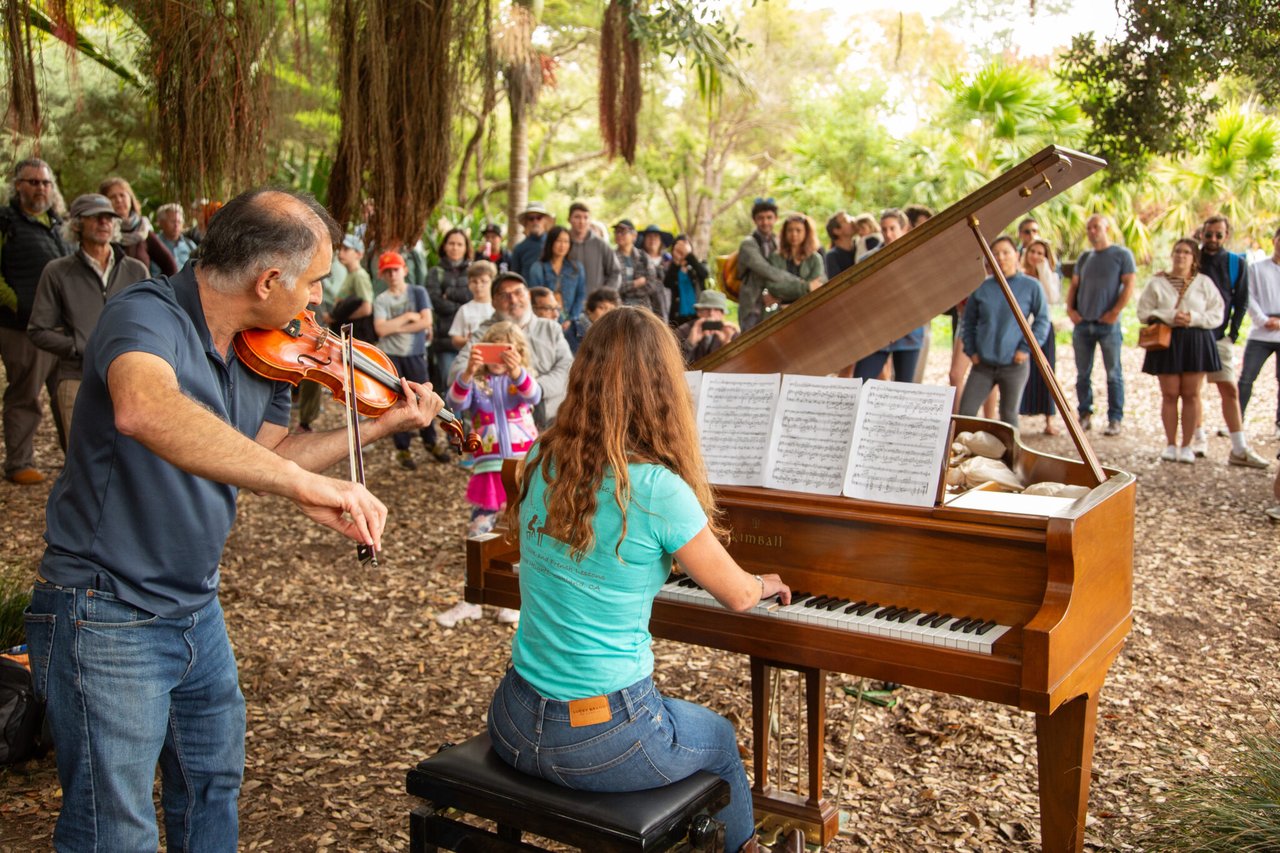
The Potrero Hill Artists' Exhibition runs on a different clock entirely. It started in 1955 when local artist Charles Farr and a group of neighbors organized it as a grassroots effort to keep the Potrero Branch Library from closing, according to the San Francisco Public Library. This year's edition opened May 9 with a reception featuring live music and kids' activities, runs through Aug. 29, and features more than 50 pieces from artists who live, work, or worship in Potrero Hill and Dogpatch. Longtime participant Sofia Carmi, a Potrero Hill resident who has shown work in the exhibition since 2008, has said the reception matters to her every year. The show doesn't have a landlord to outbid or an estate to settle. It exists because a public library building and a volunteer board keep agreeing to put it on, which has proven to be a much harder thing to shut down than a private lease.
The Potrero Hill Festival works the same way from a different angle. Now in its 51st year, the one day street fair returns to 20th Street on Oct. 17 with live music, food, and crafts, and it functions as a direct fundraiser for Daniel Webster and Starr King elementary schools and for afterschool programs run out of the Potrero Hill Neighborhood House. That Neighborhood House, designed by Julia Morgan, has operated as a multi generational community center for more than a hundred years. The festival's survival isn't tied to one bar's foot traffic or one building's sale price. It's tied to two public schools and a century old community house that were never for sale in the first place.
The pattern isn't only backward looking. Sequoia Fabrica, a new volunteer run art and workshop space with sewing machines, a laser cutter, and open community classes, opened at 1736 18th Street earlier this year. It runs on member time and small donations rather than a commercial lease, which is exactly the structure that has let the library show and the street festival outlast every bar that's opened and closed around them since the 1990s.
None of this means the closures don't sting. A neighborhood that loses its two best known live music venues in the same year loses something specific: a room where, as one longtime staffer put it, wildly different crowds regularly collided on a Tuesday night for no reason other than a band was playing. That kind of room is genuinely hard to replace, and nothing on the library calendar replaces it directly.
But it's worth being precise about what actually broke. It wasn't community interest. Thee Parkside was still averaging over 200 shows a year when the sale went through. It was ownership structure. A commercial live music venue in San Francisco depends on one person's lease, one landlord's plans, and eventually one estate settlement, and when any of those shifts, the whole thing can end on a date nobody in the neighborhood chose. A school fundraiser, a library exhibition, and a century old community house don't carry that same single point of failure, which is exactly why they're the things still standing after a 65th edition and a 51st year respectively while two beloved bars didn't make it past 35.
The rest of Potrero Hill's daily rhythm hasn't moved much either. Plow still pulls a brunch line onto 18th Street some mornings. Chez Maman, which started on the same block back in 2002, moved into a larger space a few doors down and kept its moules and frites on the menu. Goat Hill Pizza still runs its Monday night all you can eat tradition on Connecticut Street. Papito occupies a storefront with retail roots that trace back to a produce market opened there in 1908. Christopher's Books, open on 18th since 1991, is still the spot for browsing on a Saturday afternoon. Anchor Brewing still runs tours out of its building on Mariposa Street. If you're measuring the hill by its retail spine rather than its two shuttered music venues, not much has changed at all this year.
What's actually worth watching, if you live here or you're weighing whether to, isn't the count of closures. It's which kind of institution absorbs a shock and which kind doesn't. The library show and the street festival have already answered that question twice over. Sequoia Fabrica is answering it again in real time.
If you're trying to read a San Francisco neighborhood accurately, whether you've lived here for twenty years or you're weighing a move into one of the hill's Victorians, the signal isn't a single headline about a punk bar closing. It's the pattern underneath it. Brandi Mayo has spent two decades reading exactly these patterns across San Francisco's north and central neighborhoods, and if you want a clearer picture of what's actually durable on a block you're watching, from Potrero Hill to the neighborhoods around it, that's a conversation worth having before the for sale sign tells you what already happened.