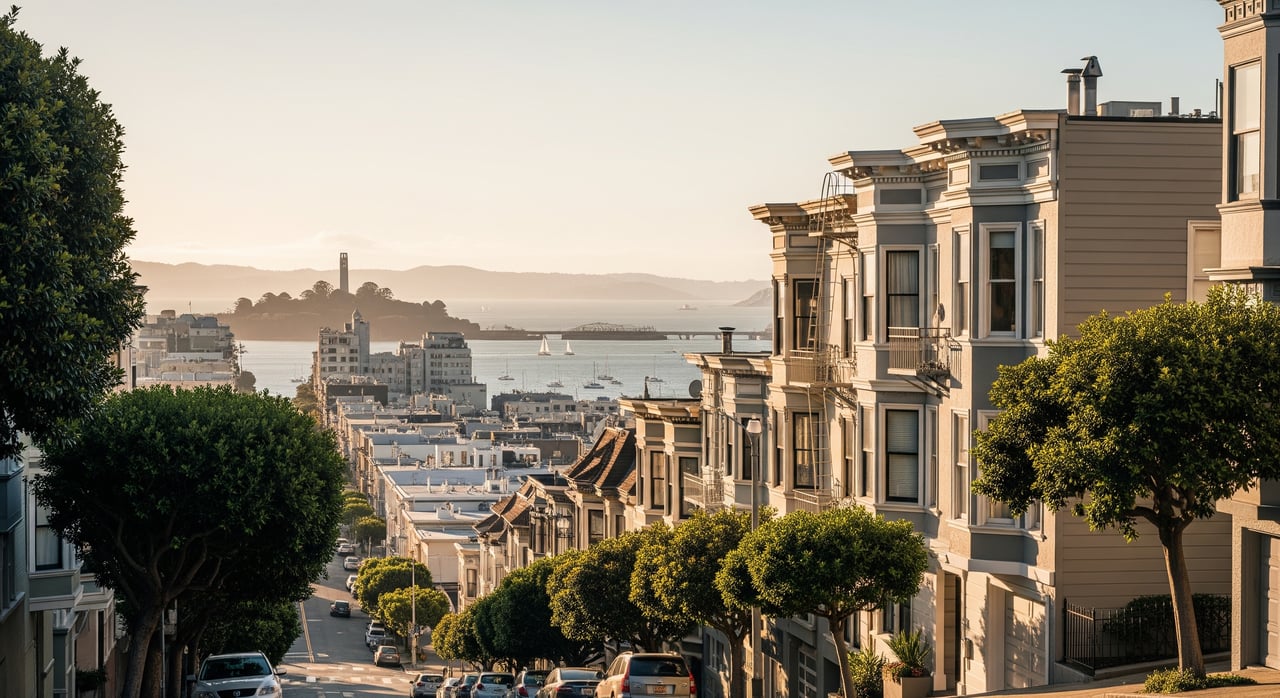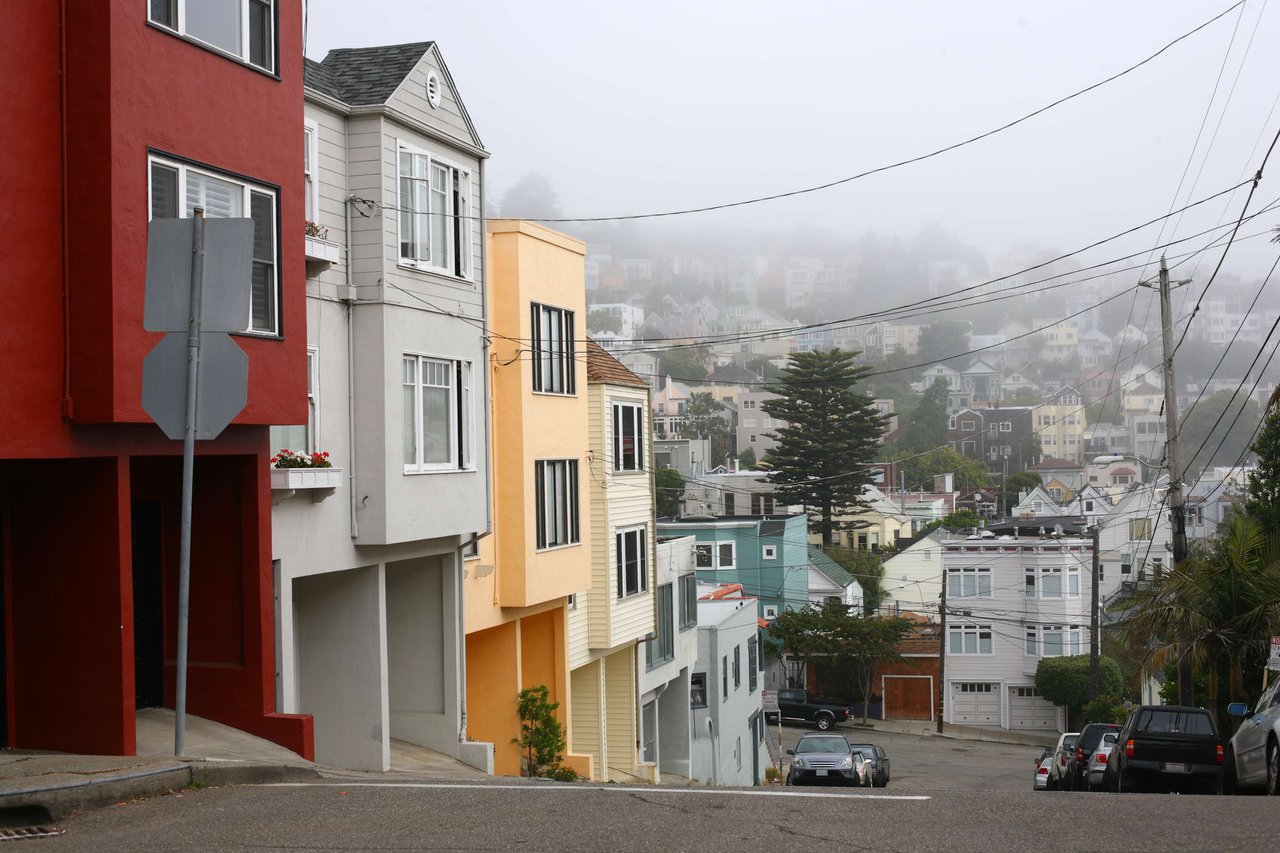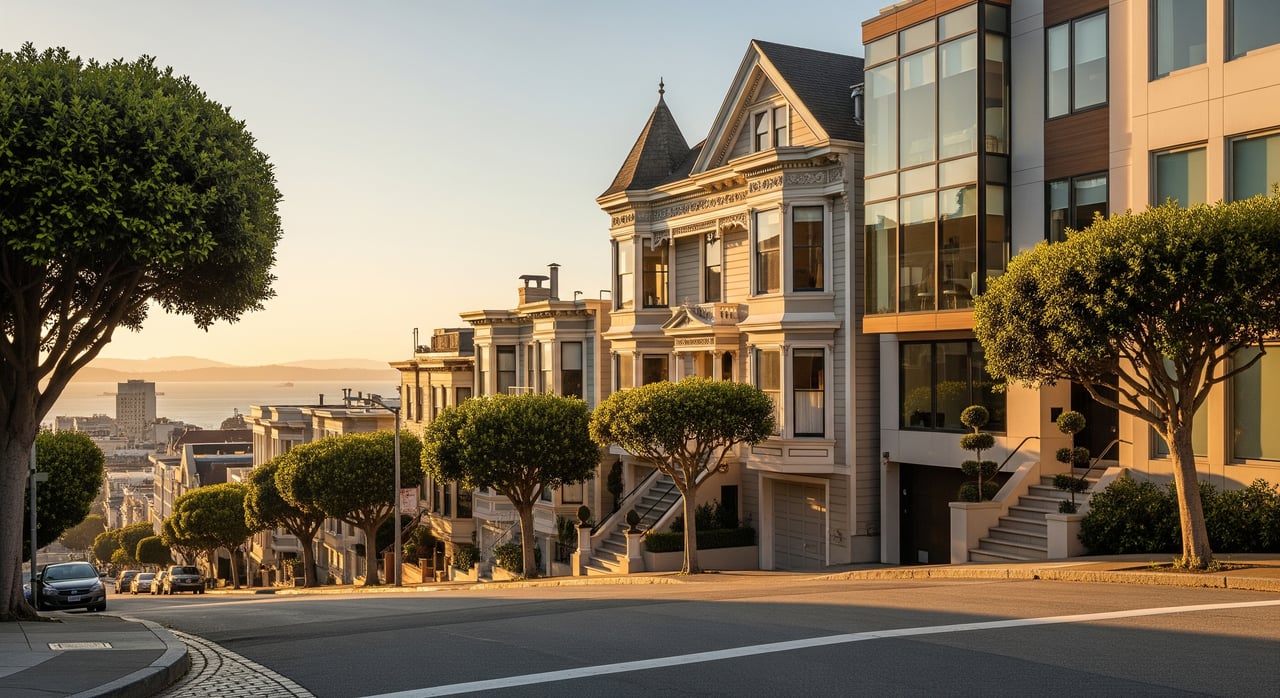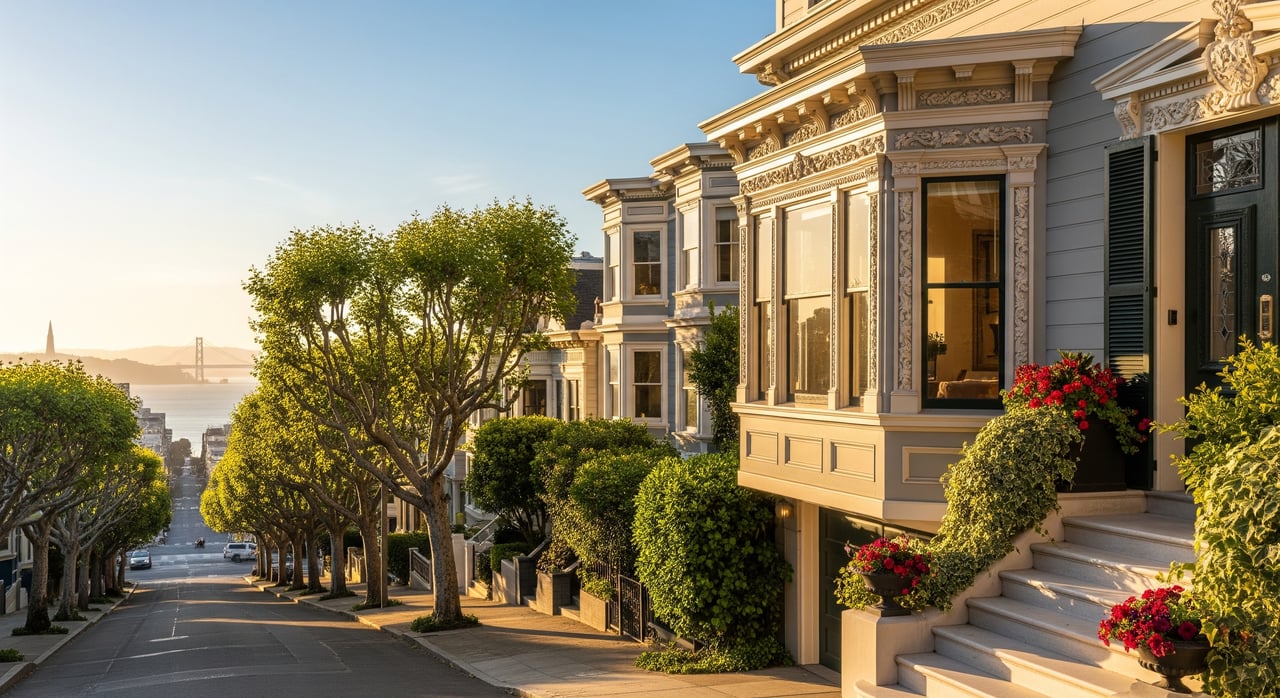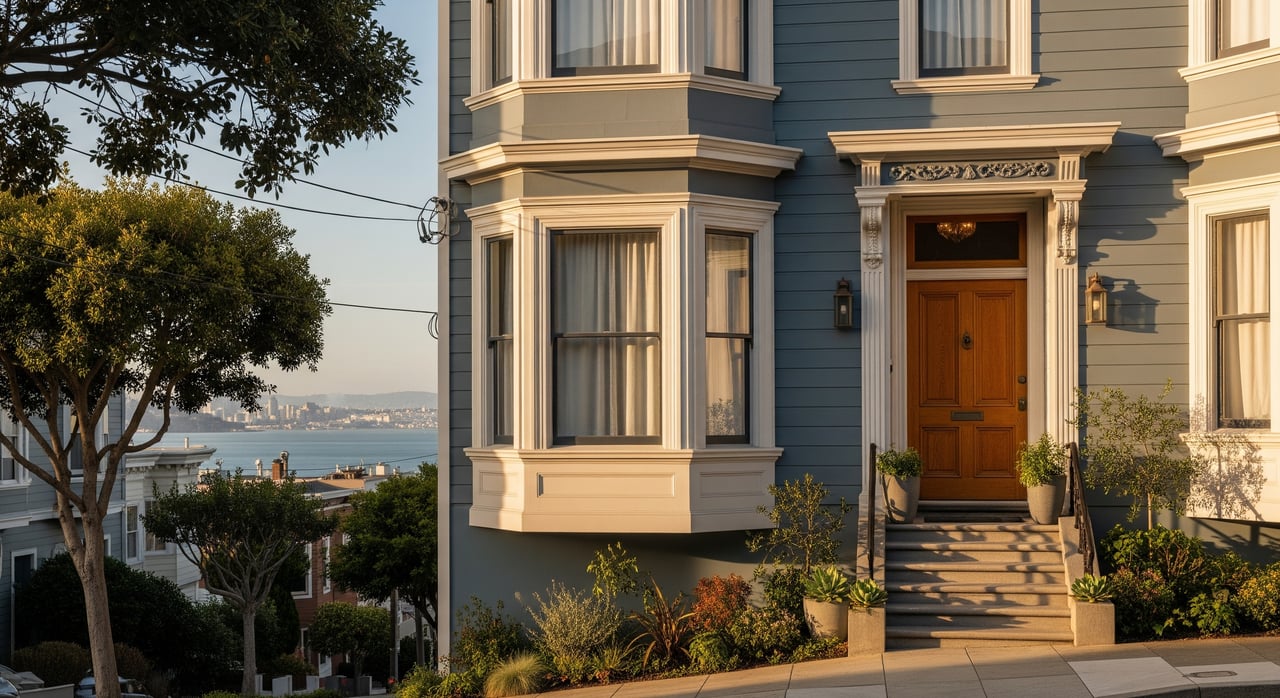
Anyone who walks Fillmore between Jackson and Pine on a Saturday morning has noticed that the street is quieter in one block and louder in another, and that the balance keeps moving. A theater that has been dark since early 2020 has permits in motion. A restaurant that held the same address for a decade is gutted. A department-store name is coming back, but not as a department store. If you already live within the four-block orbit of Fillmore and California, the shape of your neighborhood in fall 2026 is not the same as it was at Easter.
The thesis is small and specific. Upper Fillmore is no longer a shopping street with restaurants attached. It is becoming a service-and-culture spine, with a returning cinema at its center, a slate of chef-led rooms extending the day, and a retail layer that is deliberately smaller and more errand-shaped than the one that defined the corridor for the last twenty years. The rest of this post is the evidence.
The Corner That Sets the Tone
The most audible change is at 2001 Fillmore. On April 24, upstairs tenants received notices that they had until the end of May to move, with ground-floor construction beginning June 1. The incoming tenant is Monami, a Korean barbecue restaurant from Junsoo and Hyunyoung Bae, the couple behind Michelin-starred SSAL on upper Polk. Bae told the Chronicle that he wants Monami to be a Korean barbecue version of House of Prime Rib, which is a very specific reference and a useful one. It signals a large, room-sized, occasion-driven operation rather than a walk-in counter. Opening is targeted for Fall 2026.
That building has held a rotation of tenants for decades. The much-loved Pacific Heights Bar & Grill, then Thai Stick, then Noosh. What is different this time is the operator. A one-star chef expanding from Polk to Fillmore does not usually pick a corridor he expects to fade. It is the clearest bet on Upper Fillmore's next five years that anyone has made in public.
The Theater Is the Anchor Move
The other bet is bigger and slower. On April 1, 2026, San Francisco's Historic Preservation Commission unanimously approved plans to restore the Clay Theater at 2261 Fillmore, which has sat dark since Landmark declined to renew its lease in early 2020. The owner is Neil Mehta, a venture capitalist who has been buying properties along three blocks between Clay and Pine since 2023 through the Upper Fillmore Revitalization Project. A Mehta-linked fund, Friends of Fillmore LP, disclosed a $50 million raise in late March 2026, on top of an earlier $100 million round.
The Clay's numbers are worth reading closely. Seating drops from 380 to about 200. Programming rises to more than 500 screenings a year, plus roughly 100 talks and live events, with both 4K digital and 35mm projection. The concessions area expands into a bookstore-style, all-day cafe with a restaurateur already in a letter of intent. Ted Gerike, who founded the Los Angeles cinema-bookstore hybrid Now Instant and led digital at New York's Metrograph, has been named director and chief creative officer. Project director Cody Allen told the commission his team hoped to finish in early 2027.
"The theater will operate seven days a week with more than 500 annual screenings, including independent films, repertory programming, 35mm presentation and community events." — Cody Allen, project director, at the April 1 hearing
Half a museum, half a neighborhood living room. That is a very different anchor than a Landmark-era single-screen commercial cinema, and it is the reason the restaurants around it are being priced to what they will be worth when the marquee is lit again.
Under Scaffolding, Under New Ownership, Under the Radar
A compact scorecard for the corridor as of early August 2026.
| Address | Was | Becoming | Target |
|---|---|---|---|
| 2001 Fillmore | Noosh | Monami, Korean BBQ from SSAL's Bae | Fall 2026 |
| 2261 Fillmore | Clay Theater (dark since 2020) | 200-seat cinema + all-day cafe + bookstore | Early 2027 |
| 1919 Fillmore | Vacancy | Nordstrom Local (pickups, alterations, returns) | Announced |
| 2417 California | BUBU sushi bar | DON DON, takeout-forward sushi and ramen | Open |
| 2193 Polk | Former Peet's | Bageletto second location | Late summer 2026 |
Read the column on the right. Two of the five are service-shaped rather than destination-shaped. Two of the five are chef-led rooms with existing Michelin or press behind them. Only one is retail in the old Fillmore sense, and even it is a Local, not a store.
The Reduplication on California Street
Turn the corner at California and Fillmore and the changes get smaller and stranger. The tiny former BUBU space at 2417 California has been renamed DON DON. Owner Kevin Chen moved BUBU itself into the NONO space at Fillmore and Sutter and combined the two rooms. DON DON is now a takeout-forward counter with ready-to-go sushi made throughout the day, plus made-to-order ramen, udon, and Japanese sandos. Two tables inside, two outside. Nearby, Sift Dessert Bar at 2411 California has permanently closed, and Sterling Bank left the corner of Fillmore and Bush, taking one more ATM with it.
You can build a small theory of the corridor out of the reduplication. BUBU, NONO, DON DON. Three counters, one operator, three purposes: sit-down, dessert, grab-and-go. The Fillmore of ten years ago would have been three different owners with three different rents. The Fillmore of now is one operator hedging across formats. That is what a service corridor looks like when it is still figuring itself out.
A Bagel Detour Two Blocks East
Not everything new to the Upper Fillmore orbit is on Fillmore. Bageletto, the Mission bagel shop that opened in 2025 on 14th Street, is taking the former Peet's at 2193 Polk between Broadway and Vallejo, with bagels delivered from the Mission kitchen in small batches twice a day. Cofounder Kiki Theodorides told the Standard the team was aiming for a debut within 60 to 90 days of the April announcement. From a Pacific Heights front door, it is a walkable Saturday errand, and it is the closest full-service bagel counter to the Fillmore corridor. Russian Hill had been a bagel desert. It won't be for much longer.
What Returned in July
The Fillmore Jazz Festival came back on July 4 and 5, on Fillmore between Jackson and Eddy, after a scare in 2025 when organizers faced a roughly $400,000 operating gap. Chris Larsen's nonprofit Avenue Greenlight stepped in with additional sponsors. What returned was larger than what left. Three main stages named for Miles Davis, John Coltrane, Tony Bennett, and Johnny Mathis, more than twenty-five performers, and the same twelve-block footprint the festival has held since 1986. If your dog was strange that weekend, the closures were the reason.
The other July arrival was retail, and it is retail of a specific kind. Nordstrom is returning to San Francisco at 1919 Fillmore, but as a Nordstrom Local. A Local is a small-format hub for pickups, alterations, and returns. It is a deliberate bet that the corridor is a service destination for people who already live nearby. Read that sentence twice. It is the same bet the Clay is making, and the same bet DON DON is making, and it is the answer to the question of what Upper Fillmore is becoming.
A Saturday That Reads the Change
If you want to see all of it in one walk, an ordered route that takes about ninety minutes:
- Start with an 8:30 morning at the Fillmore and Sacramento corner. Note the scaffolding at 2001 Fillmore and the papered windows.
- Walk north to 2261 Fillmore. The Clay's marquee is intact. The lobby beyond the glass is still an empty shell, but the drawings are on file.
- Cross to 1919 Fillmore and read the signage on what will be the Nordstrom Local.
- Cut west on California to 2417 for a DON DON hand roll before the noon line.
- Loop back down Fillmore to Alta Plaza Park, then east on Clay for the walk home.
You will pass at least three storefronts that were something else a year ago. Count them as you go.
Why It Matters to People Already Here
The generic version of this post treats Upper Fillmore as a shopping street with an event calendar. The specific version, the one that matches what you can see from your own front stoop, is that the shopping is thinning and the service and culture layers are thickening. A cinema that draws a repeat audience twice a week is a different neighbor than a boutique that draws a single Saturday crowd. A takeout counter that turns over five times a lunch is a different neighbor than a sit-down room that turns over twice a night. The rhythm of the sidewalk in front of your building is being rewritten by these decisions, one lease at a time.
For homeowners on Clay, Sacramento, California, or Jackson, that shift is worth watching. The corridor's next twelve months will decide whether Upper Fillmore reads, in 2027, as a cultural destination with grocery-and-alterations convenience layered underneath, or as a quieter residential edge with a marquee at its center. Either outcome is a good one for the blocks around it. Neither is the Fillmore of 2019.
If you own a home in Pacific Heights or Lower Pac Heights and you are curious how a corridor's evolution shows up in what a specific block is worth, Brandi Mayo reads these shifts building by building. Take a look at the neighborhood overviews or request a home valuation when you are ready. Work With Brandi.